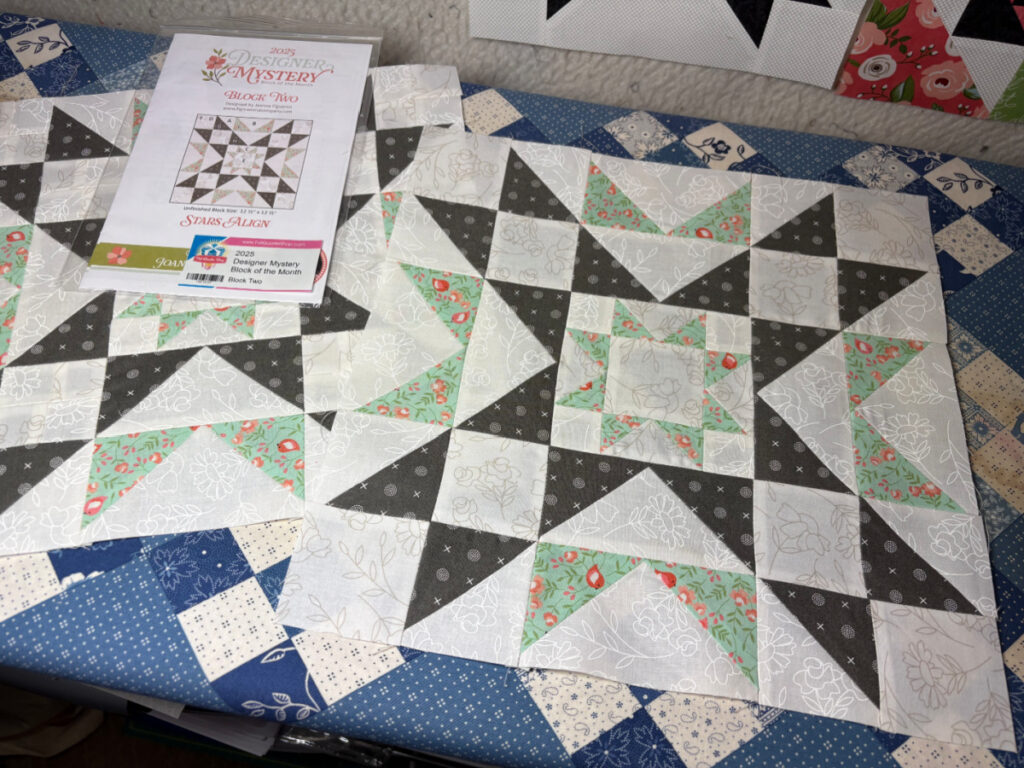
Something happened yesterday that caused me to revisit the Fat Quarter Shop’s Designer Mystery 2025 project. I had made two blocks in the sew-along and ran out of steam and interest when I realized that I did not care for the setting at all. Those sew-alongs are expensive, although they are a good value fabric-wise. I paid for all 12 blocks and the finishing kit, which contains a ton of fabric. It was a considerable investment, at well over $300.
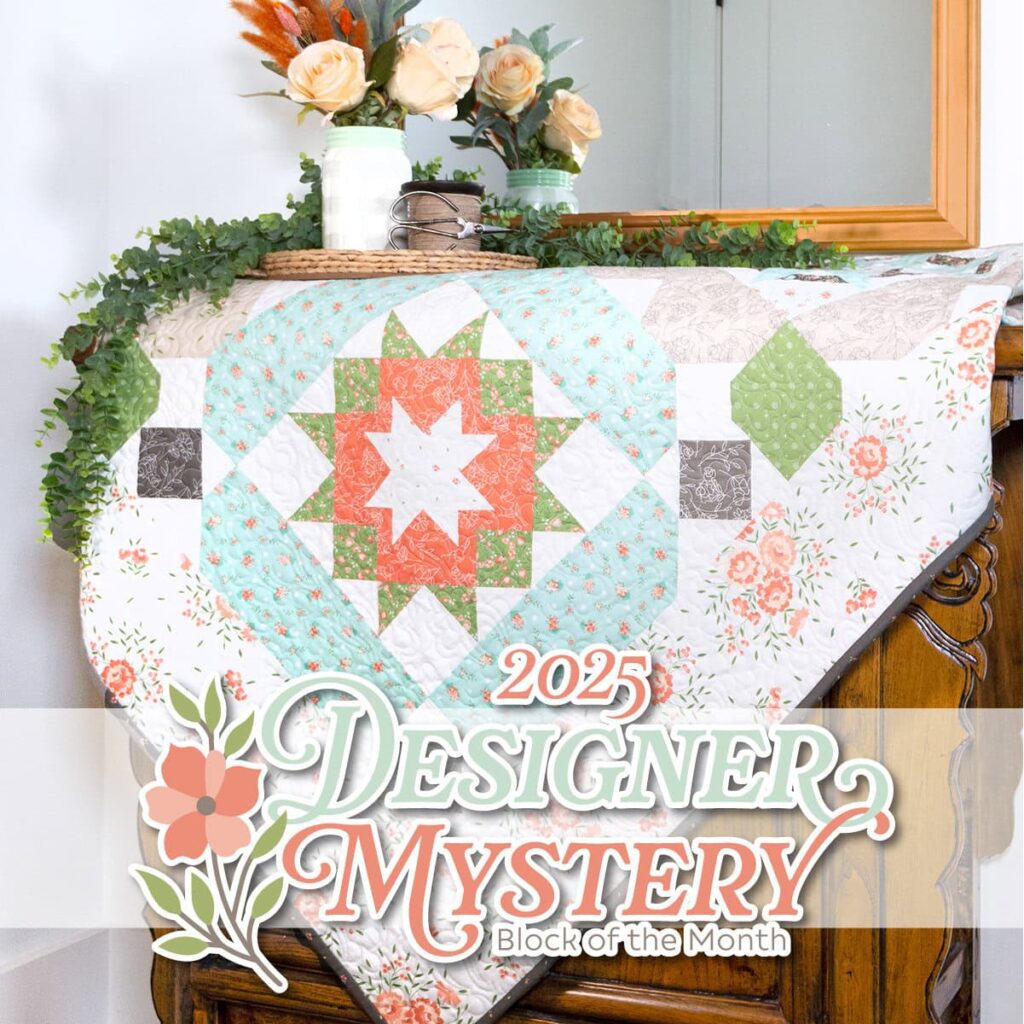
In the recommended setting, each block is surrounded by an aqua border and other low-volume prints. It just wasn’t my cup of tea, so I thought I would be unlikely to finish it. The sew-along has ended, and the Facebook group is now showing photos of the quilts people have finished. And there was a woman named Pam who submitted her version of the blocks in her own setting, and I was blown away. She’s given me permission to post her photo:
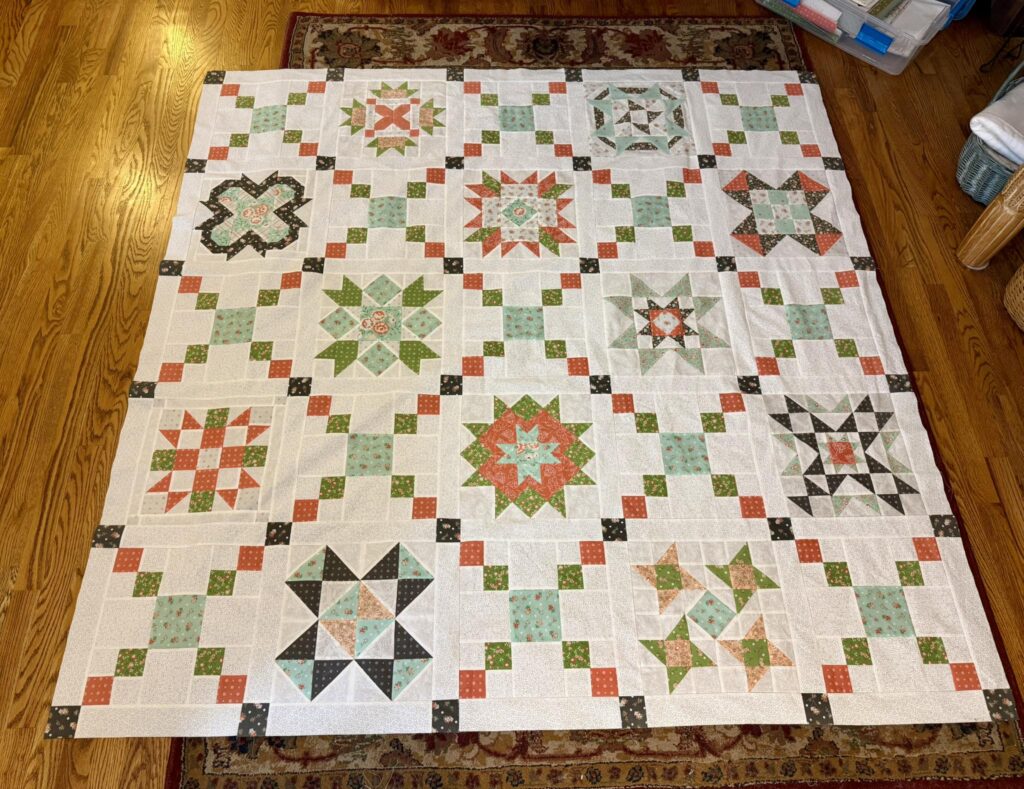
She chose a simple Irish Chain setting and I think it shows off the blocks so much better than the recommended setting! I know sew-alongs often try to do something unique that sets them apart, but sometimes simpler is better. These blocks are super complicated, and I think they stand out ever so much better in Pam’s setting.
On another note, you may wonder why there are two blocks in my photo at the top of the post. I made one block a year or more ago and didn’t press the seams open, so the block ended up kind of puckery-looking. The great thing about Fat Quarter Shop sew-alongs is that there is always TONS of extra fabric. So I used the leftovers to make another block with pressed-open seams, which I think came out so much better.
Sometimes you just need a do-over.

9 Responses
The link to the photo did not work for me.
I love secondary block settings in general. I particularly like the symmetry of chaining setting blocks.
And you have given me a good idea. I have an alphabet quilt I am finishing. I have to work the paper-pieced letters/alphabet blocks into the quilt, in order, with the items representing each letter floating around them. A chaining setting would likely work.
The link didnt work for me. The blocks are beautiful, sometimes a fussy setting detracts from the blocks. I’m partial to the Irish Chain so I’m sure the blocks look great in that setting.
Have a good day!
A do-over or a re-set might be just the thing to inspire you to the finish line on that quilt! I often press seams open for a flatter result. It takes more time, but I’ve got plenty of that!
Wonderful that inspiration renewed your enjoyment of the project. I couldn’t see the photo either. Irish chain is beloved for a reason. Although I don’t comment frequently, I read every post you make and appreciate your sewing information bit also the book reviews and the recipes!
Nicole – I’m probably the last person on earth who does not have a Facebook account! I would really appreciate it if you could send me a photo.
On another note – I have recently been diagnosed with Wet AMD and am very grateful for your sharing your experience.
I don’t have Facebook either – I did years ago, but closed it down over lockdown – spent too much time on there with friends. Now we just Whatsapp. I think that block and colouring is super! It looks like a very large block. More fabric to use up – whaheyyyyyy!
I’ve quilted quite a while but have never joined a sew-along. I had no idea the cost could be so high – wow!
you converted me to open seams….so much more accurate when sewing blocks together. the facebook account is private so I couldn’t see the picture. would love to see it. it’s funny how inspiration works. I see something and fall in love like you did with pam’s setting.
Love the blocks and your fabrics. What is the name of this block with its outer HSTs? I know the Evening Star block in the center and the HSTs around it are called Rising Star (if memory serves!) but have never seen your wonderful blocks.
Pam’s setting makes the intricate stars shine!
Hugs!