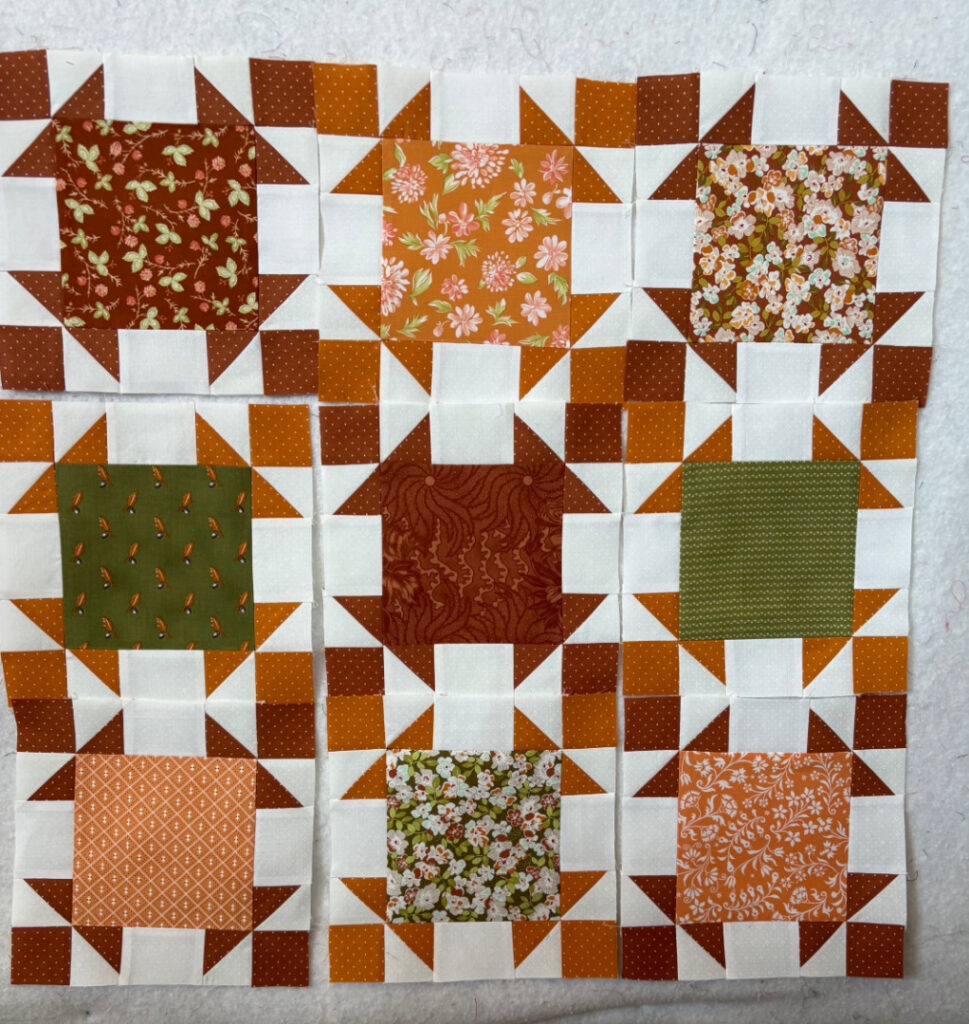
This weekend I enjoyed a few relaxing hours in my sewing room. I dove into the new Fig Tree Plough and Harvest pattern to see just how difficult those blocks were. It turns out they couldn’t be much easier. If you were hesitating about making this quilt, let me see if I can convince you to try it.
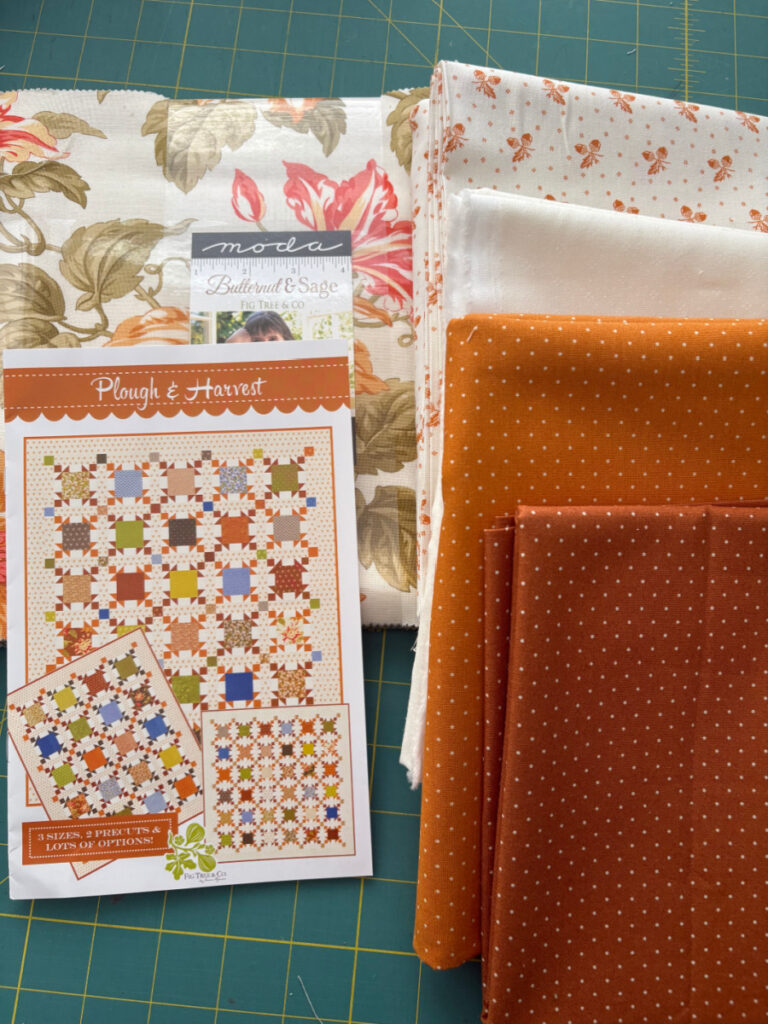
If a few half square triangles don’t scare you, you will find this quilt to be easy as pie. The blocks are so fast to make, once you get your units set up, you won’t believe how quickly they go together.
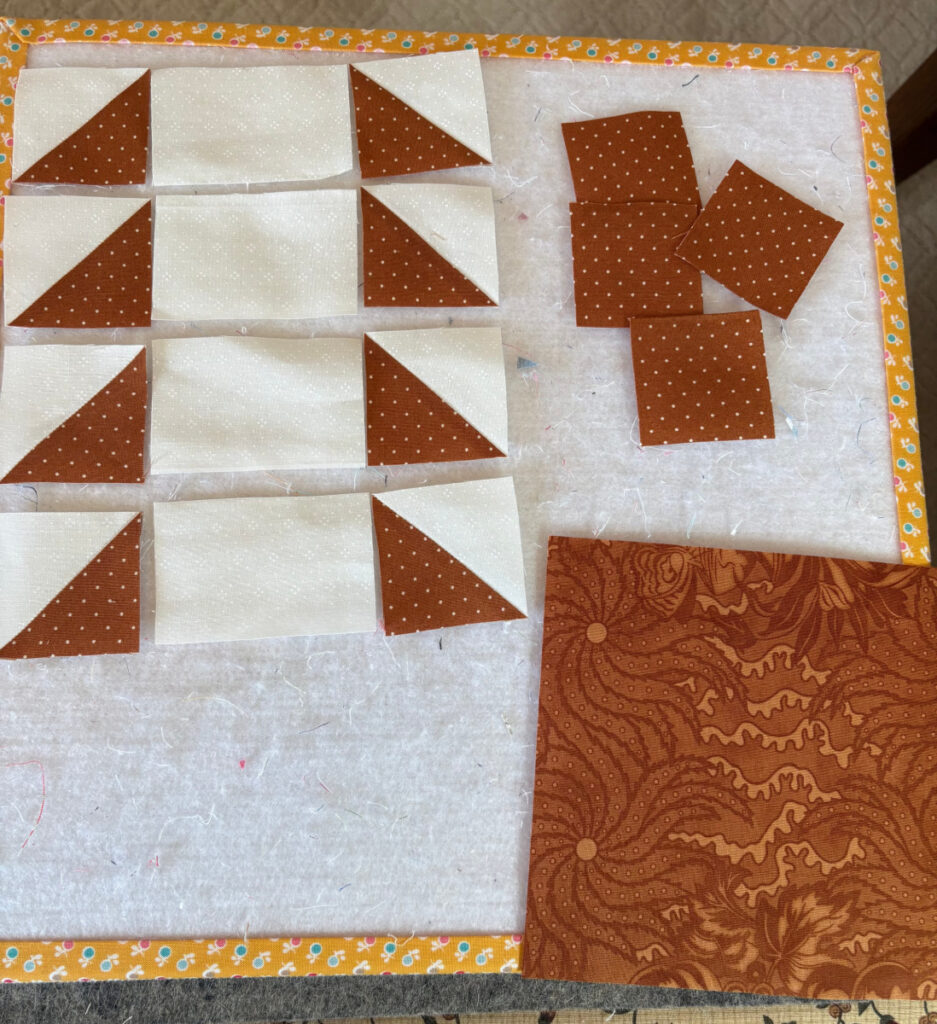
To make a block, you need eight half-square triangle units, four background rectangles, four corner squares, and one six-inch square from your layer cake. You assemble your HSTs and rectangles into four units that will surround the center square of your contrast fabric.
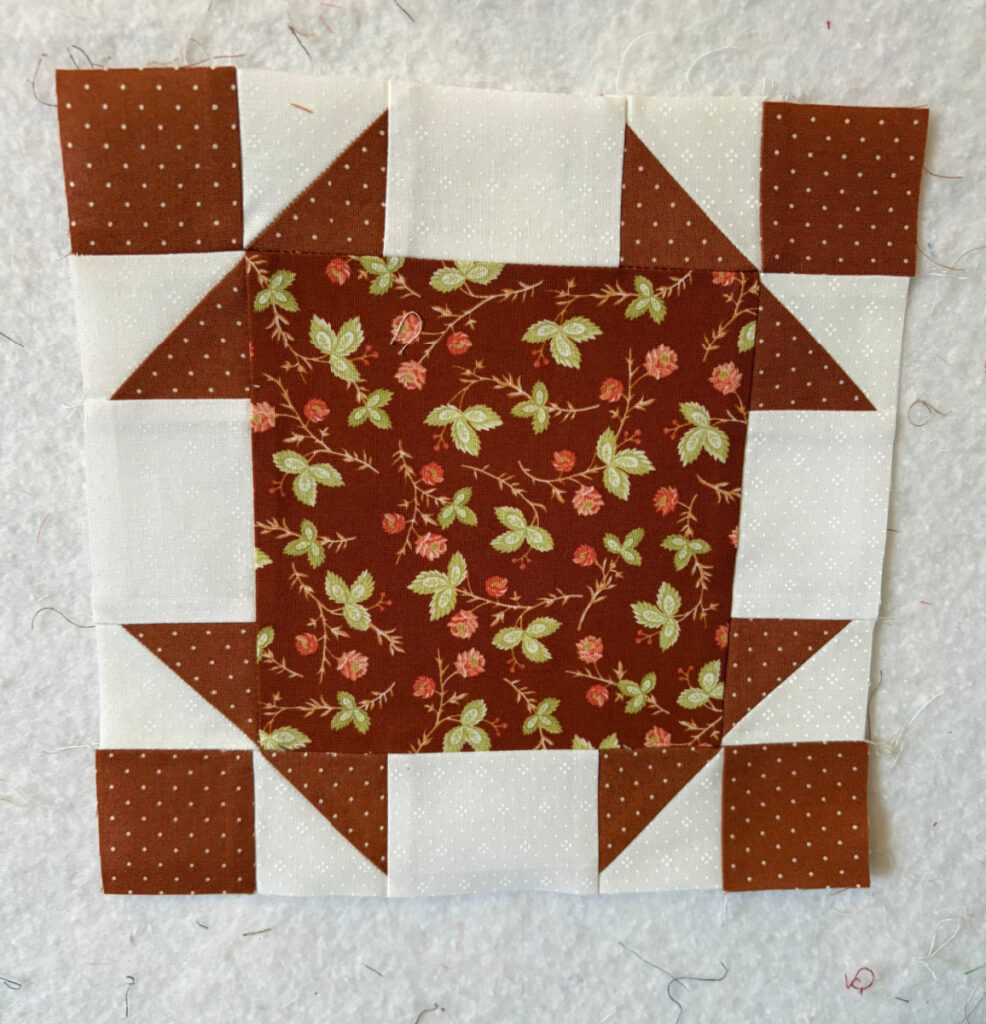
Attach two strip units to the sides, then add two more strip units with corner squares to the top and bottom. And there is your block. It helps to have all your half-square triangles made and pressed ahead of time. Then, it is just a matter of assembly. You won’t believe how quickly you can crank these out.
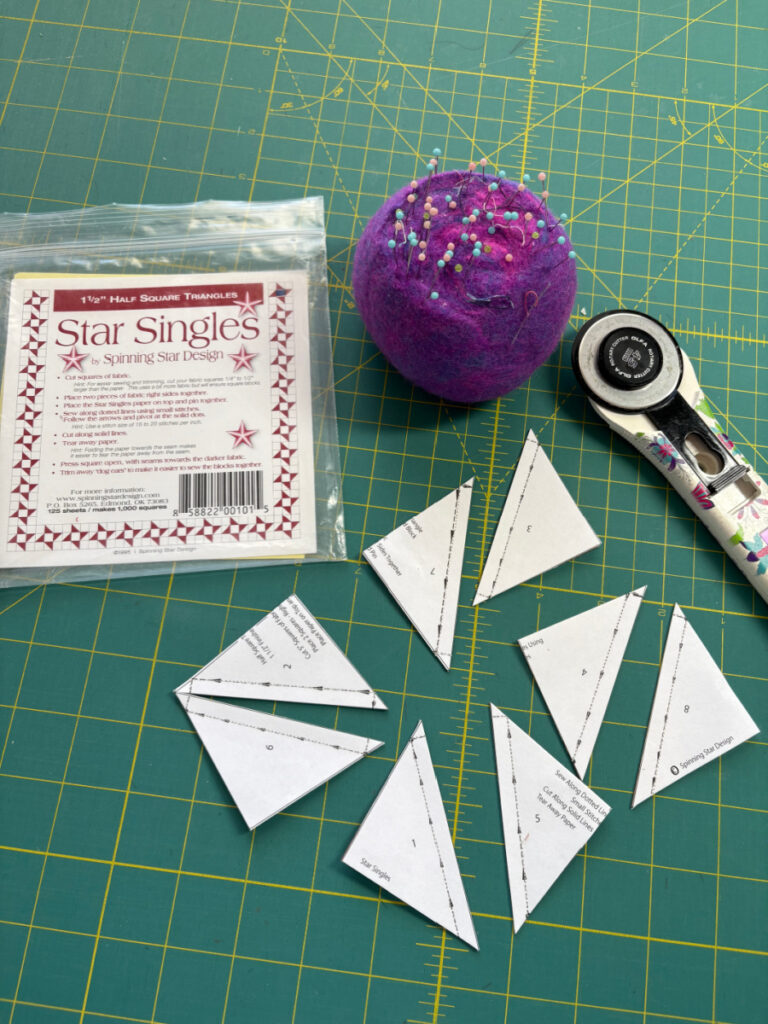
When I am making a lot of half-square triangles, my favorite method is to use triangle papers. My favorite brand is Star Singles, which I buy online at Shabby Fabrics. The size you need for this block is the 1 1/2″finished. They make eight at a time, which is just what you need for each of the blocks in this quilt.
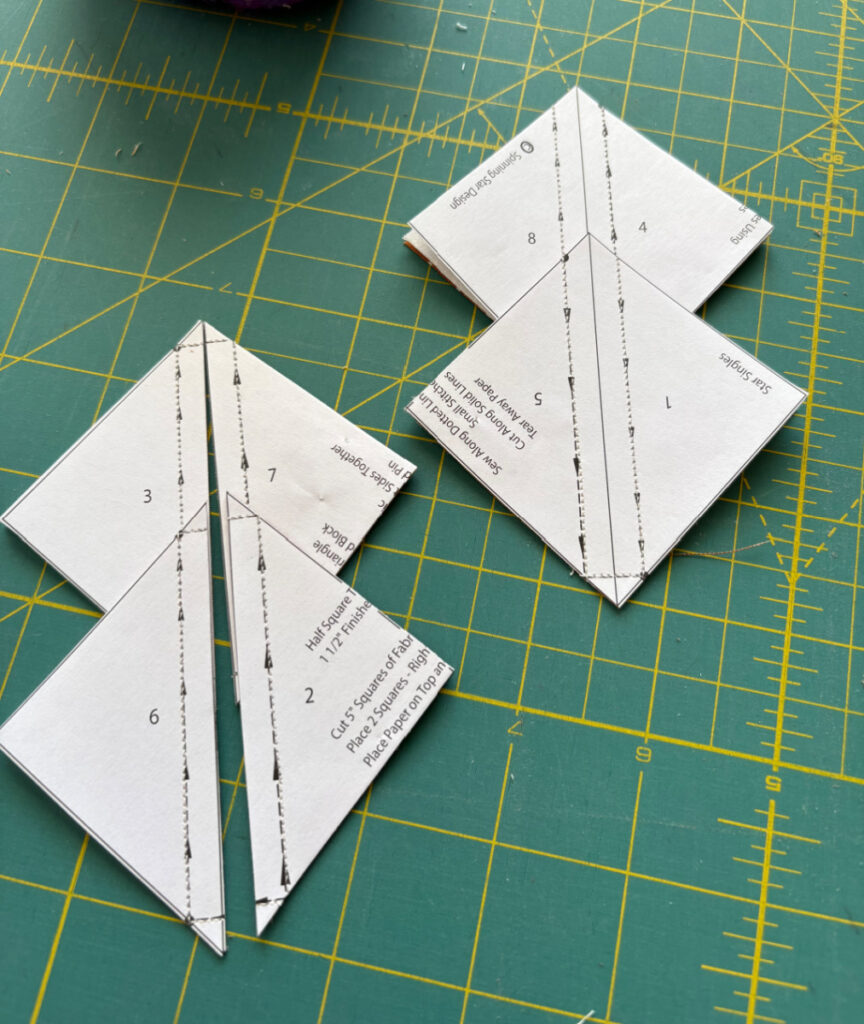
The thing about using triangle paper is that you do need to cut the units out and pull off the papers. I find this a very fast process, but here is a little tip to save a smidgen of time. I stack two sections one on top of each other, with the cutting line carefully aligned, and then slice them in half two at a time.
A few of thoughts on the pattern. One. The method of making half-square triangles in the pattern is not good, IMO. The instructions say to cut squares and then cut them in half so you are sewing two triangles with bias edges together. No, no, no. Awful idea. I never would make HSTs that way. Of the dozens of ways you could make hsts, that is positively the most terrible way. Again, my opinion.
Two, the pattern instructions say to press the HSTs open. I found this time-consuming step was totally unnecessary. The seams of all the intersecting hsts nest together perfectly if you just press to your darker fabric.
Three. Americans say Plow, not Plough. This is a minor gripe, but it jangles me every time I have to type it.
Other than that, I am having a great time making these cute blocks.
It turns out, I did not end up using all the layer cake of Butternut and Sage. It had blue and grey fabrics, and I wanted a russet and green fall look. I dipped into my stash and used fabrics from older Fig Tree collections, Primitive Gatherings, and even some old Civil War reproduction fabrics
Hope you all had a splendid weekend! Happy sewing.

14 Responses
wow— that is easy! I’m shocked because when you see the pattern small, it almost looks like feathered stars. Happy Monday and can’t wait to see it come along.
The block looks much trickier than it really is!
Nicole, I love your blocks and the fabrics you chose to use! The word plough irks me too. I come from a long line of farmers and
Grandfathers who plowed with with mules and walked behind the plow. My father and husband used modern machinery. I was thinking of making this quilt in honor of my husband who passed away.
I have no idea why they chose the British spelling. The designer is American as far as I know.
I thought the pattern looked harder than it is. Thanks for showing us how to make it, now I am interested in giving it a try!
Let me know if you do!
Those blocks are really coming along and are lovely! A good way to showcase some nice prints without cutting them all up. Beautiful fall quilt in the making. Thanks for your tips on the pattern as well.
This is the pattern to use when you have a collection with lots of pretty prints!
I love the fall colors….I hate bias edges. I’m currently stressing over little bias edges for a basket block. ugh.
I do love a basket block.
Love your blocks and yummy fabrics, Nicole!
I’ve never ever cut bias edges for HSTs. I cut squares and layer two, right sides together, then use the diagonal line and sew on either side of it, and last, cut on the diagonal line. You have 2 identical HSTs and not a bias edge to stretch anywhere!
We have lovely cool weather 81*F/68*F and rain likely tomorrow and Wednesday!
Hugs!
I use that method all the time, especially if I just have a few hsts to make. Why anyone would want to sew two triangles with bias edges together is a mystery.
I find it funny when “designers” use that method to make 1/2 square triangles. In my humble opinion that is truly old school, why work with bias edges when there’s so many other options? I usually make my blocks bigger so I can square them up! Love the quilt you’re making!
I completely agree with you. It makes me wonder if this designer used someone else to write the pattern. I have never seen her use this method of making hsts in any of her other patterns. It is so old-fashioned.